What Star Does the Earth Orbit?
The Sun's Structure
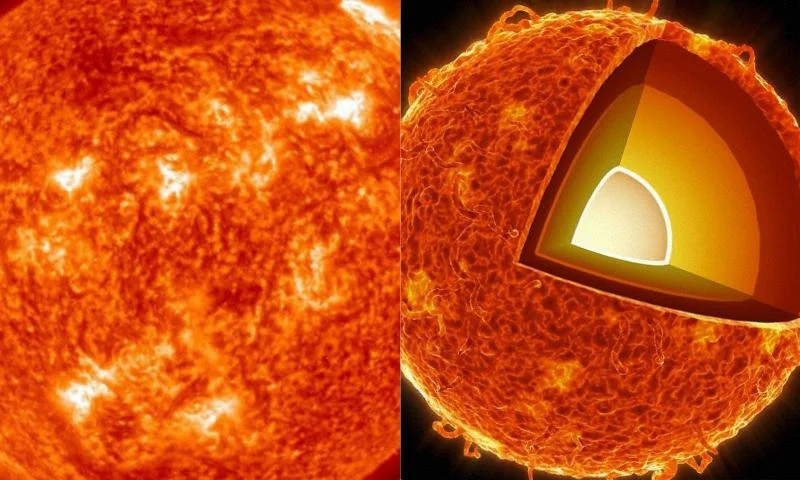
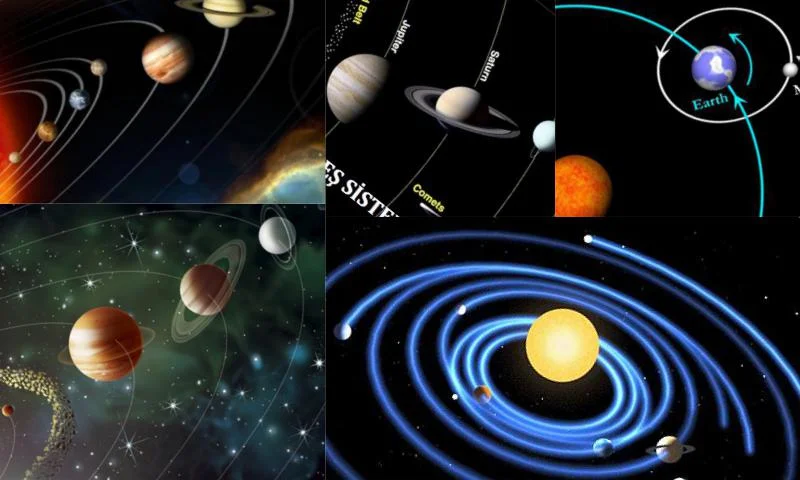
The Earth completes one rotation around its axis every 24 hours. This is called 1 day. In addition to its movement around its own axis, our planet also moves within the Solar System. It completes one orbit around the Sun every 365 days and 6 hours. This information explains the formation of 1 year. The Sun is one of the most important sources of energy for Earth. It is a star, just like all the small stars seen from Earth at night. The Earth constantly orbits this star, which is the closest to us. In the Solar System, not only Earth but all other planets revolve around the Sun, with the Sun at the center. However, because their orbital speeds and sizes are not the same, the concept of a year differs for each planet. The Sun is composed of hot gases. Three-quarters of these gases are hydrogen, and the rest is helium. Besides these two elements, there are very small amounts of iron, oxygen, magnesium, calcium, neon, and carbon. In addition to being a source of heat and light, it also emits radiation. The Sun, which appears yellow from Earth, is actually white in color. It is approximately 1,300,000 times larger than Earth. Its distance is 149,000,000 kilometers. Contrary to popular belief, the Sun does not remain stationary. Like other celestial bodies, it rotates around its own axis. It completes one rotation in 25 days. While the Sun's internal temperature is 20,000,000 degrees Celsius, its surface temperature is 6,000 degrees Celsius. The Sun has a total of 3 layers. These are the core, radiative, and convective zones. The part we can see is called the photosphere. Only a small portion of sunlight reaches Earth. This amount is approximately 1 in 2.2 billion.
The Path of Sunlight
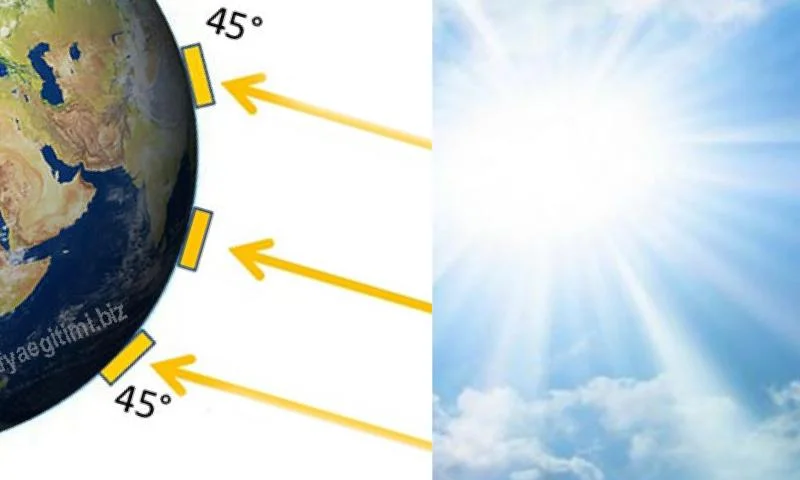
In the Sun's core, energy is released through the conversion of hydrogen into helium. This energy consists of protons. There is a considerable distance from the core to the surface. As protons travel this distance, they transfer their energy to each other, causing it to decrease. This results in the energy reaching the Sun's surface being less intense than what is produced at the core. Due to the high level of radiation at the core, this process reduces the radiation. Consequently, the rays reaching Earth are largely free from high levels of radiation. However, this purification is not complete. The atmospheric layers that Earth possesses are therefore vital for humans.
The Age of the Sun
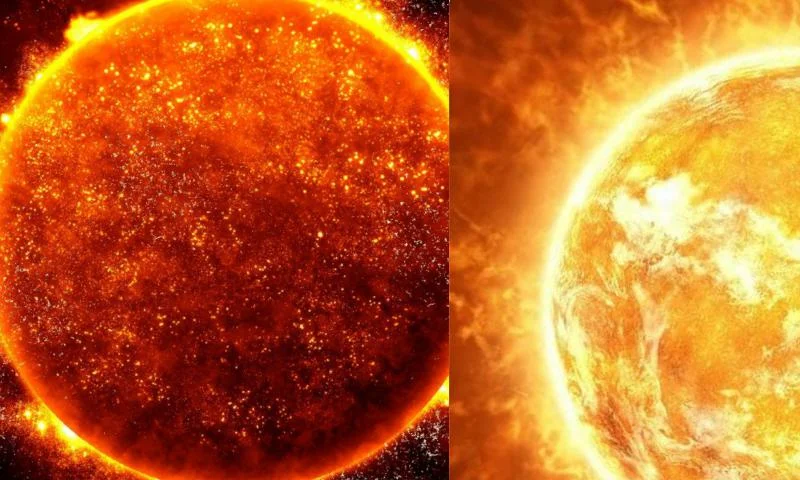
As a piece of general knowledge, the Sun is a much brighter star than 85% of the stars in the Milky Way Galaxy. This does not mean it will shine forever. The Sun, which produces energy by converting hydrogen into helium, will collapse like other stars when it no longer has enough fuel. Currently, according to scientists' estimates, the Sun is 4.57 billion years old. Based on its estimated lifespan, it can live for approximately another 4 or 5 billion years. In short, the Sun has completed half of its life. The Sun is vitally important for all living beings, from multicellular organisms to the smallest single-celled organisms. For this reason, humans are placing much greater importance on space research for the future.