
What Should Be on an Invoice
Identification Information Section
An invoice is an official and valuable document that formalizes the transaction between the buyer and seller. Invoices, generally printed in at least 3 copies, are nowadays produced with carbonless copy paper at printing houses.
Content Section
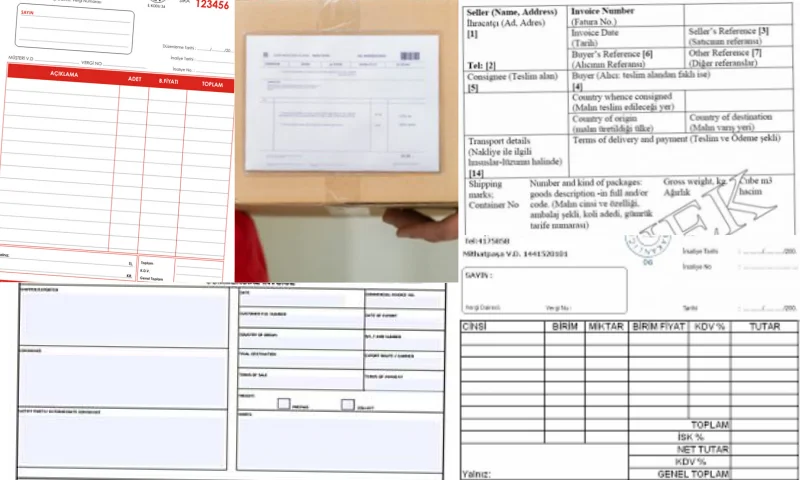
An invoice contains various types of information. There are certain mandatory parts. The invoice must include fields such as the invoicing company's logo and name, or trade name, address, tax office, and tax identification number. The date of issue, series, and invoice number are also among the mandatory fields that must be present. Then, for the customer to whom the invoice is issued, their name, surname, address, tax office number (if applicable), and tax identification number are of great importance. It is important how the content of the sold goods or provided service is written on the invoice. In other words, it should be stated for which transaction or work the invoice is issued. In addition, the quantity, unit price, and the total amount excluding tax are specified in the item description section. The delivery date for the relevant goods or the date and number of the consignment note for the work performed are also specified on the invoice. According to the Tax Procedure Law, the sections mentioned so far must absolutely be included on the invoice.
From the Perspective of the Turkish Commercial Code
From the perspective of the Turkish Commercial Code; in addition to parts such as the company's name, title, tax identification number, and address, the company's website (if any) is also specified. Companies that are obligated to have a website and those subject to independent audits must provide this information. After the invoice issuance is completed, the service provider or seller performs the stamping and signing process, which is the final official step. The sequence and series numbers on the invoice are of great importance for their continuity. Dates, sequence, and series numbers must never be backdated. Errors made on an invoice are canceled, filed, and stored. The obligation to store invoices covers a period of 5 years from the date of issuance. The period for issuing an invoice is 7 days from the delivery of the relevant goods and from the commencement of the provision of the relevant service. The distinction between an open and a closed invoice is made between the two parties in terms of mutual receivables and payables, i.e., current accounts. An open invoice situation is realized by signing in the upper blank space of the invoice page, while a closed invoice is realized by signing in the lower part of the page. However, there is no such legal obligation according to tax laws. According to tax laws, the location of the stamp and signature is not important.